For domestic violence services, refuges, foundations and funders
Fund a year of rebuilding for the women you already support.
A professionally produced 12-month recovery program your organisation funds for the women in its care. Movement, nutrition, wellbeing and expert education, designed so she never has to share her story to take part.
- Three intakes a year
- Home and gym pathways
- Budget-first nutrition
- Measured in week one and week eight
Recovery and healing is Pillar 4 of Australia's National Plan to End Violence against Women and Children 2022–2032. It is the stage that begins when the crisis work ends.
Maria's story has been told on
The support ends when the crisis does.
You get a woman to safety. Housing, legal, counselling, a caseworker who knows her name. Then the acute phase closes, her file closes, and she is expected to rebuild a body and a sense of herself on her own, usually with no money.
She is not asking for a gym membership. She is asking for a reason to get up, something to follow, and other women who understand what she has come out of.
You are not broken. You are depleted. There is a difference.
Me vs Me Movement

Why women are not warned.
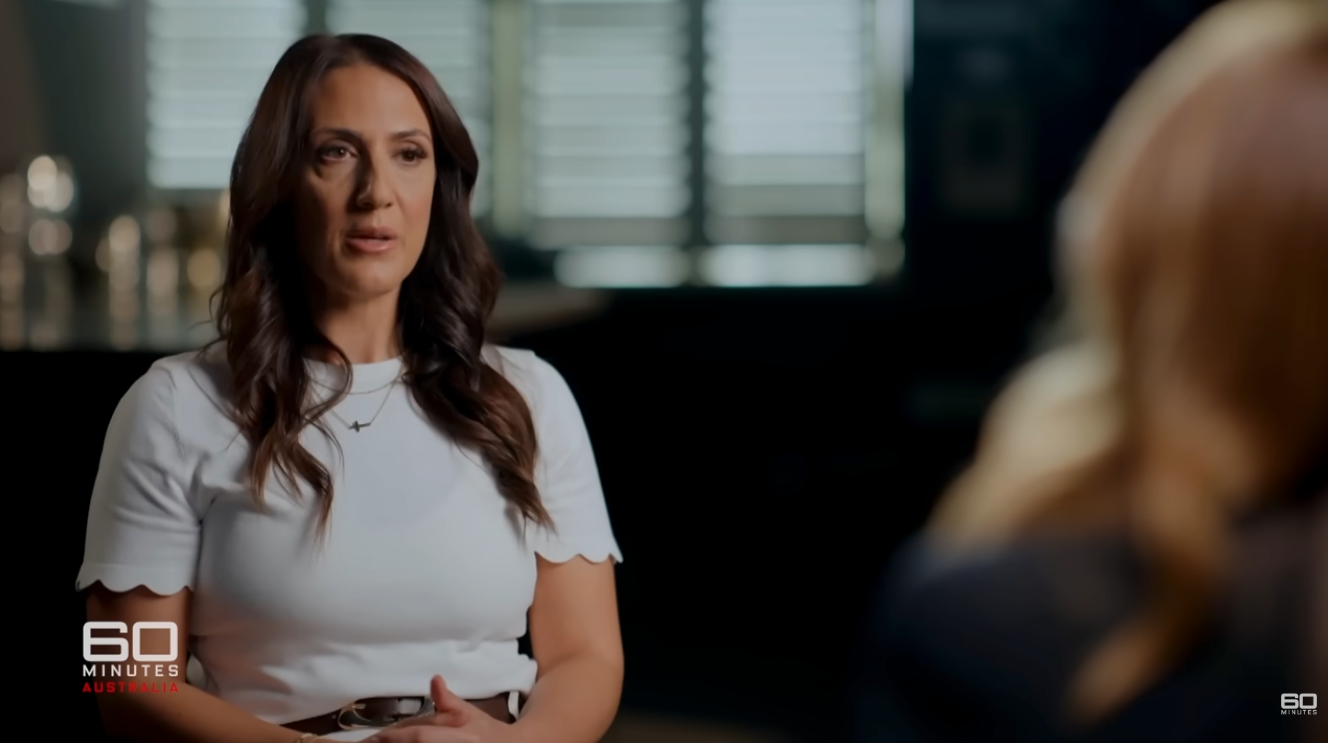
Maria's story reached a national audience on 60 Minutes Australia, asking whether a woman has any right to know that the man she is with has a history of violence. She is now taking that question to Parliament.
Deciding whether to put your women through this program? This is the short version of why it exists.
If the player does not load, watch it on YouTube.
Eight weeks that build on each other, not eight topics.
Every woman starts with the same first block. Each week has one emotional purpose, while movement and nutrition stay constant underneath it, so there is always something familiar to come back to.
- 01
This is my start
A welcome from Maria, a private starting-point check-in and three nutrition basics.
I'm not alone. I've started.
- 02
You are not alone
A trauma-informed psychologist on isolation and identity. Connection that never requires disclosure.
I belong somewhere.
- 03
Move with me
The signature session, Move with Maria. Movement for capability and energy, not body size.
My body is capable.
- 04
Choose yourself
A dietitian on affordable food, and the Can't-Be-Bothered Collection for chaotic days.
I'm worth looking after.
- 05
Find your voice
Self-worth, boundaries and self-talk, with a trauma-informed domestic violence professional.
My voice matters.
- 06
My next step
A DV-aware financial counsellor on the basics. Practical independence, never pressure.
I can take my next step.
- 07
Dream again
The Me vs Me Vision Night, and a panel of women who rebuilt different parts of their lives.
I'm allowed to dream again.
- 08
Look at me now
The week-one check-in again, a letter to her future self and a 90-day plan.
Look how far I've come, and I'm not finished.
You do not have to do everything.
You do not have to be further ahead.
You do not have to share your story.
You can start where you are, and you do not have to do it alone.
The Me vs Me promise, made to every woman in week one
Every week has the same nine parts.
A familiar shape lowers the effort of turning up. She never has to do all of it to belong.
- A moment with Maria A short recorded introduction that feels like she is speaking to one woman.
- Move A simple home or gym pathway, with shorter options for difficult days.
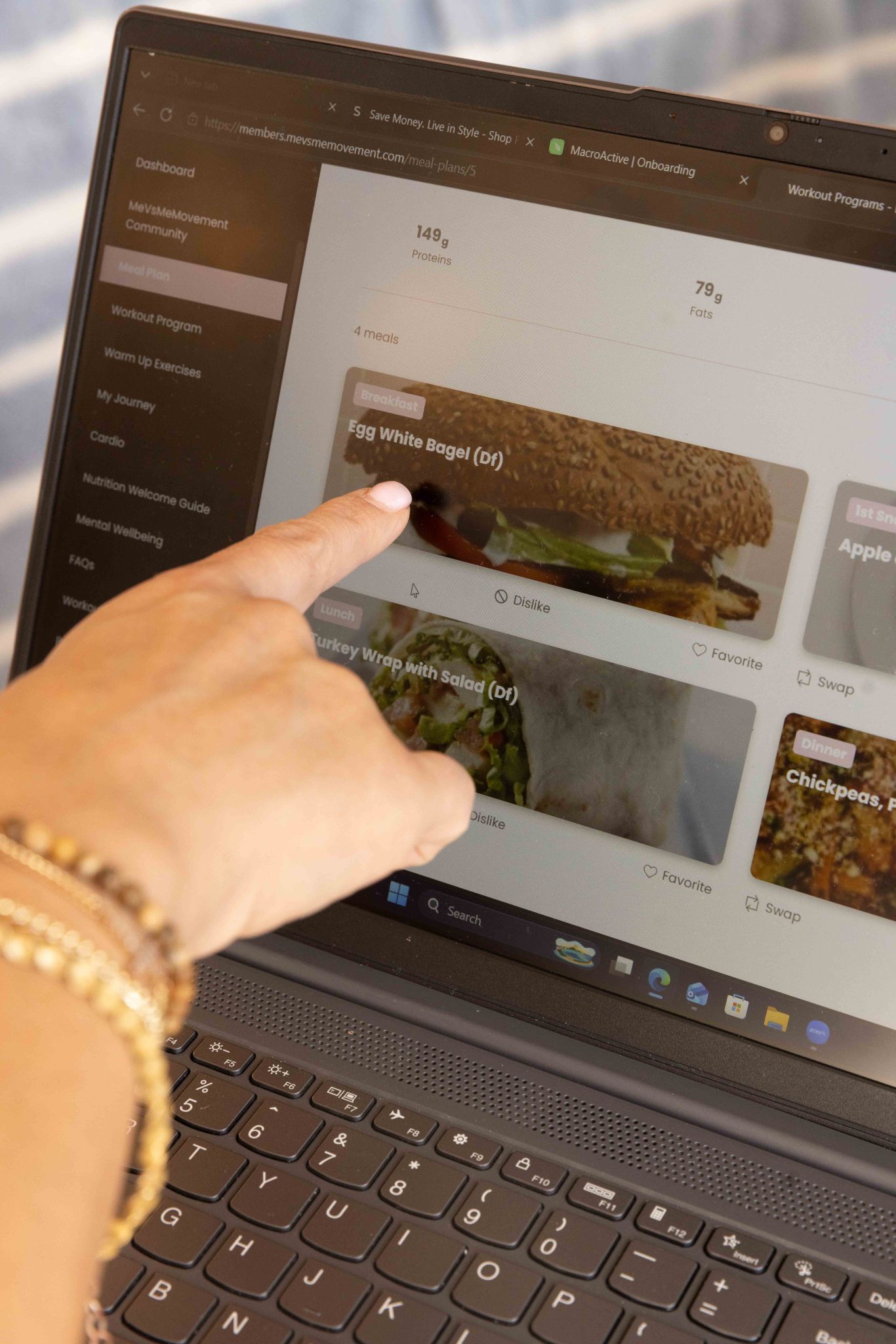
- Nourish Practical, affordable nutrition guidance built for real life.
- Reset Grounding, breathwork, mobility or relaxation, led by qualified practitioners.
- Learn Short expert conversations with practical takeaways.
- Real Woman. Real Story. Hopeful stories about what became possible, not trauma detail.
- Connect Optional community prompts that never ask about her history.
- One small action One achievable step to take that week.
- Reflect A short prompt that helps her notice her own progress.
No before-and-after photographs. No weigh-ins as a measure of worth.
No restriction culture and no punishment framing. What gets celebrated is turning up and getting stronger, not shrinking. If your team has watched a wellbeing program undo a woman's progress, this is the part to read twice.
An annual partnership, not a hundred app subscriptions.
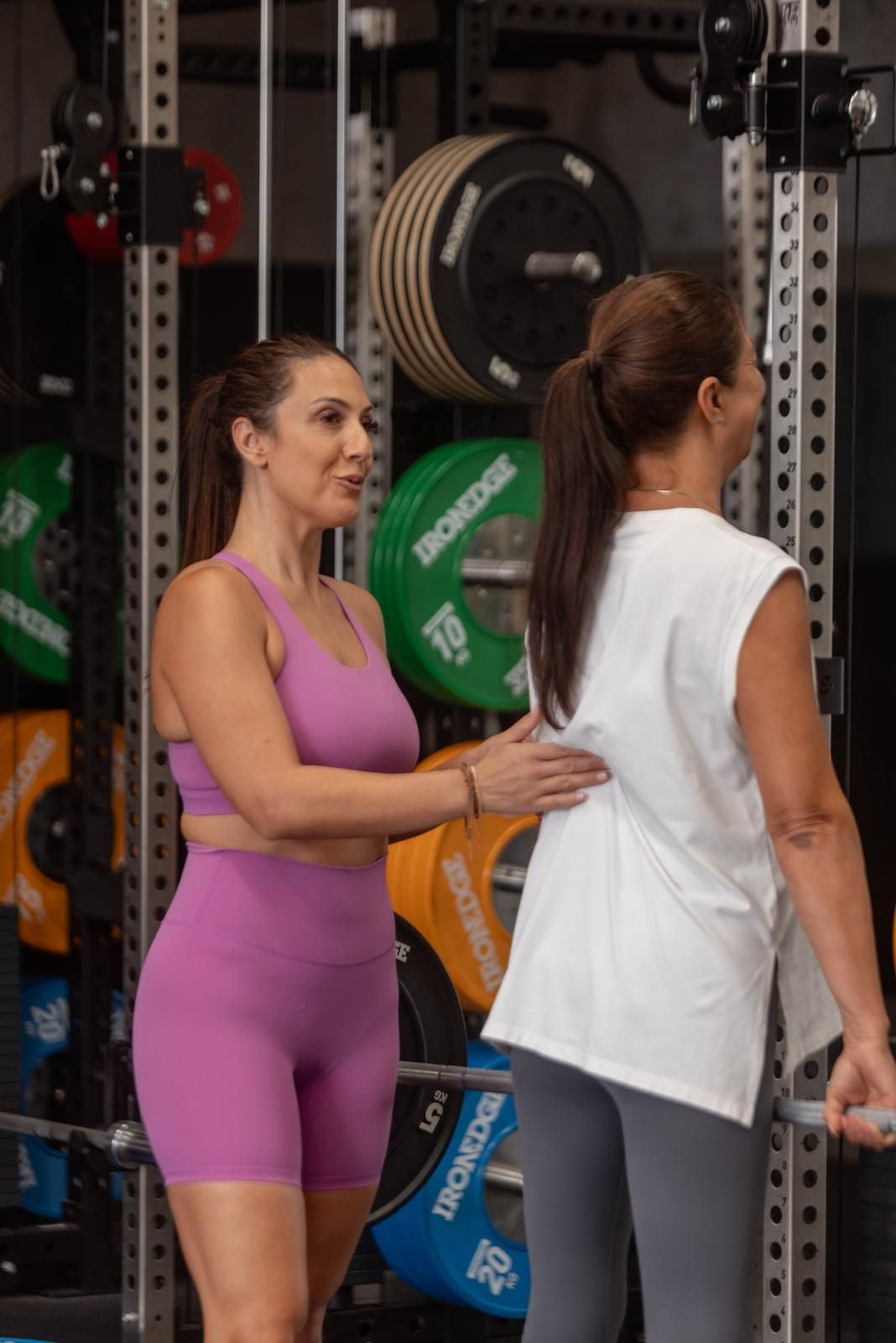
You fund a set number of places across three intakes. We deliver the program, the content, the experts and the community behind it, professionally recorded so every woman gets the same standard whether her cohort starts in February or October.
- Places across three intakes Women start and finish as a cohort. Your team chooses who is invited.
- A qualified expert faculty Trauma-informed psychologists, a dietitian, a DV-aware financial counsellor and women's health.
- Maria, live with your cohort Ask Maria Q&A and a closing celebration on Zoom.
- The full nutrition library More than 1,000 recipes across 23 cuisines, with budget and dietary filters.
- Challenges built for low capacity Personal targets, so ten minutes a day can be one woman's win.
- Continued access Lighter ongoing access after week eight, so nothing stops dead.
Ask for a costed proposal Tell us your numbers and your funding cycle. We will work to them.
Progress measured in her own words, from week one.
Every woman completes the same private check-in when she starts and again in week eight. No scales and no photographs, just the things recovery is actually made of.
- Hope
- Confidence
- Connection
- Energy
- Self-care
- Movement
- Belief in the future
The same check-in, twice
Seven areas, asked privately at the start and again at the end, so the change is visible to her first.
The question she answers twice
In week one she is asked how she would love to feel eight weeks from today. In week eight she comes back to her own answer.
She leaves with a plan
A letter to herself one year from now, and a 90-day plan: one thing for her body, one for herself, one she is moving towards.
Twelve months, not eight weeks. In a national survey of 1,116 Australian women who had left an abusive partner, 81% described recovery as an ongoing process of healing rather than a finish line. 1 When 665 women defined recovery in their own words, it went beyond safety to moving on and enjoying a better life. 2 The partnership year is built for that longer arc.
1 Carman & Kay-Lambkin (2022), “Long-Term Recovery from Intimate Partner Violence: Recovery and Hope”, International Journal of Environmental Research and Public Health 19(21). doi:10.3390/ijerph192113825
2 Carman, Kay-Lambkin & Burgman (2023), “Long-Term Recovery from Intimate Partner Violence: Definitions by Australian Women”, Journal of Family Violence 38(4). doi:10.1007/s10896-022-00389-3
Cited as alignment with what survivors describe as recovery, not as an evaluation of this program. We are building partner reporting with our first services, so what you receive back is designed with you.
Safety and privacy
We assume her phone is not private.
Technology-facilitated abuse is common. A program delivered to a woman's phone has to start from that assumption rather than treat access as a convenience.
She is invited, not enrolled
Your team identifies the women and invites them in. She is never asked to pay, never sees a payment screen, and there is nothing to sign up to publicly.
No public profile
Taking part is not a public act. She is not building a profile other participants can browse, and nothing about her involvement is published anywhere.
Ask us anything, in writing
Lock-screen behaviour, where data is held, who can see it, how long it is kept, how she deletes it. Ask before you commit and we will answer in writing.
If your service has a device-safety protocol, send it to us. We would rather build to your standard than ask you to accept ours.
Me vs Me started at 5am, in a car park.
Maria Barbaro survived a violent attack. Before that, a marriage she got herself out of, and years of raising her children alone.
About six months afterwards she called a friend who had said to ring when she was ready. At 5am he met her in a car park and they went to the gym. They did it every morning for a year. She has described being barely present for the first stretch of it, and going anyway.
This program is lived-experience-led. It is designed by a woman who needed it and could not find it, which is why it starts gently, refuses before-and-after culture, and assumes no money and no gym. Lived experience shapes the design; qualified professionals deliver the clinical content.
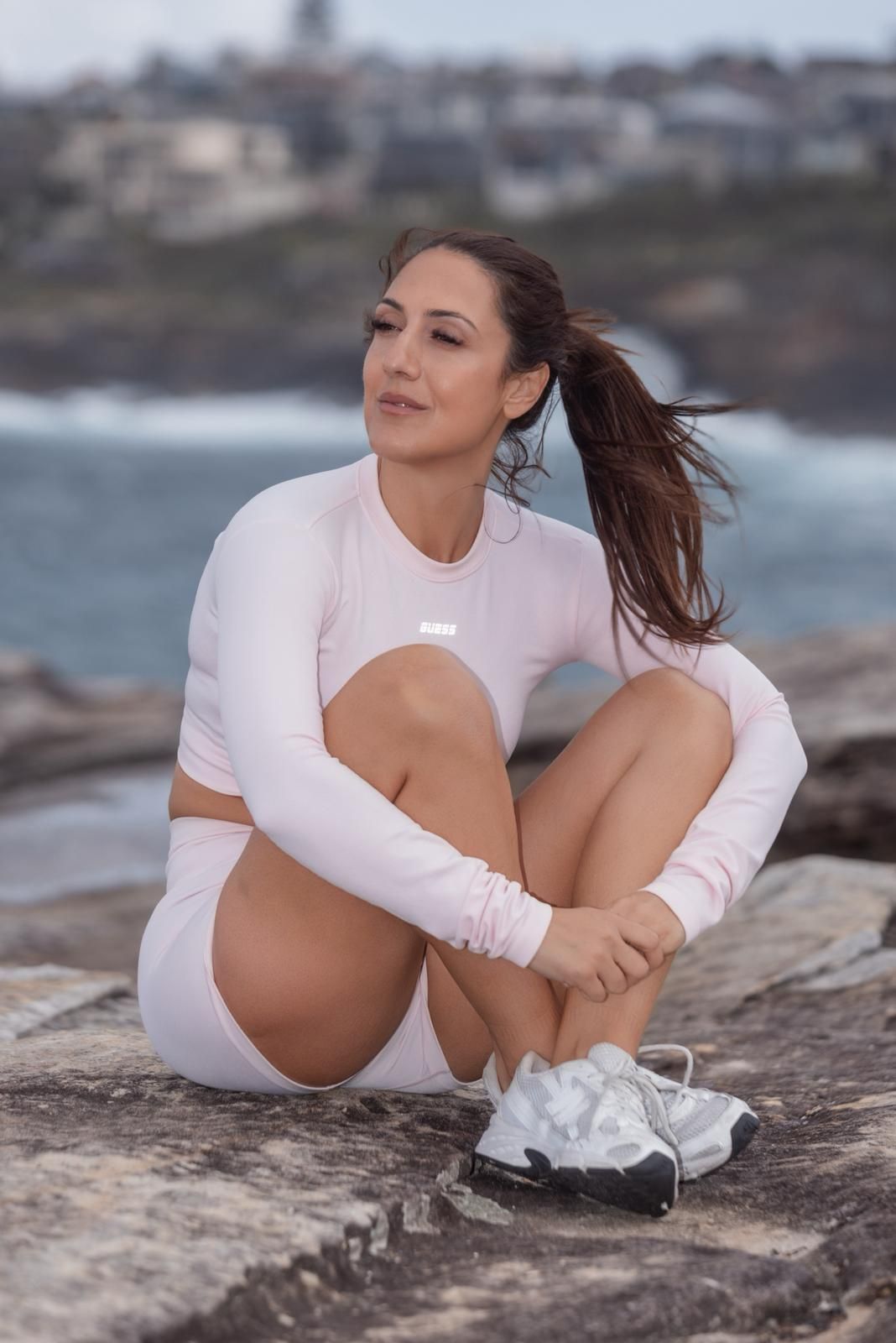
For media
For podcasters, producers and segment bookers.
“It was me versing me every day. I'm not in competition with anybody else.”
Maria Barbaro
Maria is available for interviews, podcasts, panels and on-camera contributions, in Australia and internationally, remote or in studio. She is based in New South Wales, and her previous broadcast work includes 60 Minutes.
What she speaks to
- Surviving and recovering from domestic violence
- Why women are not warned, and the case for disclosure reform
- Rebuilding a body and a life after trauma
- What services actually need once the crisis has passed
- Raising children alone, and starting over more than once
Making an enquiry
Tell us your outlet, format and deadline and Maria's team will come back to you about availability. Press assets and a one-page background are available on request.
Questions administrators ask.
Do the women pay anything?
What does a woman actually do each week?
Does she need a gym, or equipment?
Can the women we support afford the food?
Does anyone see what she writes?
What if our intake does not line up with your cohorts?
Do we have to commit to a full year, and what does it cost?
Who is behind the platform?
She got herself out. The next part is the bit nobody funds.
Fund a year of it for the women you already have in front of you.
Prefer email? Write to maria@mevsmemovement.com and we will send the same information.
If you are in immediate danger, contact your local emergency service.
Register your interest
Tell us who you support.
Two minutes, no obligation. We come back with a costed proposal for your numbers, usually within two business days.
Interest registered